

Full transparency: I’ve spent hours digging through customer reviews, product specs, and real user experiences to help you figure out if it’s the right choice for your space.
So you’re drowning in shoes, and your closet floor looks like a sneaker graveyard. Been there, researched that
The Whitmor 36-pair over-the-door shoe rack keeps popping up as one of the go-to solutions for people dealing with shoe chaos in small spaces. But does it actually work, or is it one of those “looks great in photos, disaster in real life” situations?
After going down the rabbit hole of customer reviews, retailer listings, and organizing forums, here’s everything you need to know before hitting that buy button.
Quick Overview (Skip Ahead If You’re In a Hurry)
- Holds up to 36 pairs of shoes across 12 tiers
- Hangs over your door – no drilling required
- White metal and mesh construction
- Bars flip up for more high-heeled shoes
- Works great IF you have the right door setup

What You’re Actually Getting
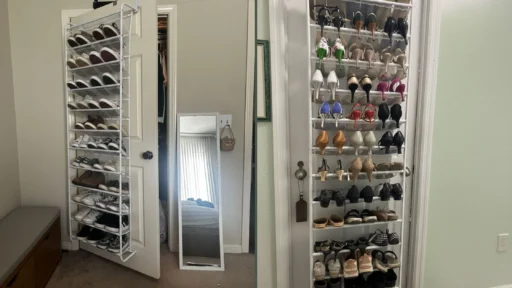
This isn’t some fancy boutique closet system. It’s a straightforward metal frame that hangs over your door with 12 horizontal bars designed to hold your shoes.
The dimensions are roughly 69 inches tall (almost 6 feet), 22 inches wide, and stick out about 7.5 inches from your door. The frame is white-coated metal with a mesh backing that prevents shoes from sliding through.
Based on what customers say, the mesh backing is actually one of the standout features. Unlike solid plastic or basic wire racks, the mesh allows airflow around your shoes, which matters if you’re storing gym sneakers or shoes that get worn frequently.
Who Is This Actually For?
From what I’ve gathered from reviews and user feedback, this works best if you:
- Live somewhere you can’t put holes in walls (apartments, dorms, rentals)
- Have more shoes than closet space
- Want to actually SEE your boots instead of forgetting they exist
- Don’t mind a rack visible on your door
- Need affordable storage without a $200 closet system
If you’ve got a spacious walk-in closet with built-in shelving, you probably don’t need this. But most people are working with standard closets or bedroom doors, so this becomes a practical solution.

The Features That Actually Matter
Let me break down what makes this rack work – and what the real-world implications are based on customer experiences.
The 36-pair capacity is real…with caveats. According to reviews, you can genuinely fit that many shoes if they’re mostly flats, sandals, or standard sneakers. If your collection includes lots of boots or chunky shoes, expect more like 24-30 pairs. Still a significant upgrade from floor piles.
No tools needed is legit. Multiple customers confirm this takes about 10 minutes to assemble with no tools required. You hang it over your door with the included hooks. People who describe themselves as “terrible at DIY” report successful installation.
The mesh backing makes a real difference. Reviewers consistently mention that this helps with ventilation and prevents that musty shoe smell. The mesh also keeps shoes from sliding backward off the rack.
Those flip-up bars get praise. Customers love that each bar can flip upward to create extra height for boots or high-tops. Way more flexible than fixed-shelf organizers.
Door protection pads are included. The rubber pads between the rack and your door help prevent scratches, which renters especially appreciate in reviews.
What People Love and What They Complain About
Based on hundreds of customer reviews across multiple retailers, here’s the honest breakdown:
What Gets Consistent Praise:
Massive storage boost without sacrificing floor space. This is the #1 benefit people mention.
Setup is genuinely easy. Even non-handymen report success with installation.
The price-to-storage ratio is excellent. At $30-40, you’re getting way more capacity than similar-priced alternatives.
Build quality feels sturdy. Not flimsy or cheap, according to most reviewers.
The white finish is clean and neutral. Blends with most decor styles.
Versatile beyond shoes. Some customers use these in pantries, bathrooms, or laundry rooms for other storage needs.
Common Complaints and Issues:
Height can be problematic. Several reviewers mention the bottom dragging on thick carpet or insufficient door clearance.
Weight distribution requires attention. Top-heavy loading makes some units feel unstable, according to reviews.
Door closure is affected. The added depth means your door won’t close as flush to the frame.
Middle shelves are harder to see. Multiple people mention needing to bend or crane their neck to check the middle tiers.
Wide shoes can be tight. Men’s larger sizes or wide boots don’t always fit comfortably, based on feedback.
Visible on the door. Some people dislike the aesthetic of having an organizer hanging there.
Why Choose This Over Other Options?
After comparing this to dozens of other over-the-door shoe organizers, here’s what sets it apart:
Most alternatives fall into two categories: fabric pocket organizers (which reviewers say sag and look messy) or basic wire racks (which work but feel cheap).
The Whitmor rack hits a middle ground. It’s got sturdy metal construction, but that mesh backing differentiates it from pure wire designs. And according to customer feedback, those flip-up bars provide way more control than fixed pocket organizers.
It’s not the fanciest option out there, but for the price point and capacity, it makes sense for most people who need practical shoe storage without major investment or wall damage.
Important Things to Consider Before Buying
Based on customer experiences and common issues mentioned in reviews:
Measure your door setup first. This is the most common regret in negative reviews – people didn’t measure, and the rack didn’t fit. Check:
- Space between the top of the door and the floor (need at least 69-70 inches clearance)
- Door thickness (hooks need about 1.5 inches to grip)
- What’s behind the door when closed (need ~8 inches clearance)
Think about weight placement. Reviews suggest keeping heavier shoes toward the middle or bottom rather than loading the top tiers.
Your door swing will be affected. The extra bulk means reduced door clearance. Consider furniture placement.
Assembly is required. Not complicated according to reviews, but budget 10-15 minutes for setup.
Should You Actually Buy This?
Based on the research and customer feedback patterns, here’s my honest assessment:
If you’re dealing with shoe clutter in a small space and need affordable, non-permanent storage, this is one of the better options in its price range. The mesh backing alone makes it superior to most alternatives under $50.
The ability to adjust those bars for different shoe heights is genuinely useful, according to customers who own multiple shoe types.
Just make sure your door situation will accommodate it – that’s really the only major dealbreaker based on negative reviews.
For apartments, dorms, or rental homes where permanent shelving isn’t an option, customer feedback suggests this delivers on its promise. It’s not fancy, but it solves a real problem.

Common Questions Based on Customer Reviews
Will this fit my door? Most standard interior doors work, but measure first. Reviewers confirm the hooks need about 1.5 inches of door thickness.
Does it scratch doors? Not if you use the included pads according to most reviews. Just avoid overloading with excessive weight.
Can I mount it on a wall instead? Yes, but you’d need to buy wall anchors and screws. The hooks are designed for door installation.
What about really big shoes? Reviewers with men’s size 13+ report sneakers usually fit, but bulky work boots or wide sizes can be tight.
Do I need tools to set it up? No. Customer reviews confirm that everything snaps or slides together without tools.
Will it hold boots? Short boots, yes, according to reviews. Tall boots require flipping up multiple bars, which reduces total storage spots.
Does it come in other colors? White is most common, though the availability of other colors varies by retailer.
Final Thoughts
This is one of those purchases that either makes perfect sense for your situation or doesn’t. Based on customer feedback patterns:
Buy it if: You need vertical shoe storage, can’t drill walls, and have a compatible door setup. At this price point, even if it’s not perfect, you’re not risking much.
Skip it if: You’re particular about aesthetics, have door clearance issues, or need to store primarily oversized footwear.
For most people dealing with shoe clutter in compact spaces, customer reviews suggest this is a solid solution that actually works. Just measure your door situation first.